Nduku was feeling quite ambitious with our trip to India. Though we only had a week, she was intent on seeing as much of different parts as possible, and everyone had been suggesting Kerala. So, off we went to the other side of southern India to Kochi, locally known as Cochin, a major port city on the southwest coast of India. It’s the most densely populated city in Kerala.
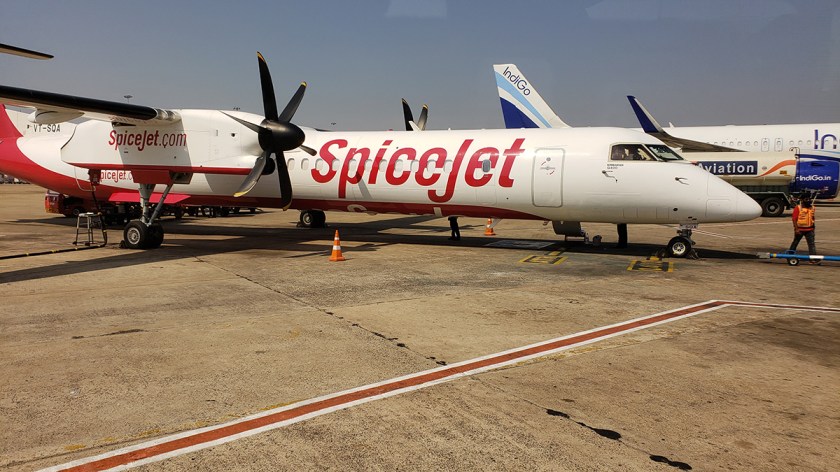
The plane ride there was short, flying into Cochin International Airport. As you’re approaching, you see a bunch of solar panels just outside the terminals. What makes this airport unique is that it’s completely solar-powered.
“Solar energy is the future,” according to V.J. Kurian, Managing Director of Cochin International Airport. “We feel this will be a much, much better source of power than the coal-based or the gas-based power plants.”
Kurian pioneered the solar project while Cochin is the biggest and busiest airport in Kerala state in India, and the fourth busiest airport in India in terms of international traffic. The project began in 2013 in response to the rising cost of electricity, and in 2015 Cochin became the first airport in the world to be completely powered by solar energy.
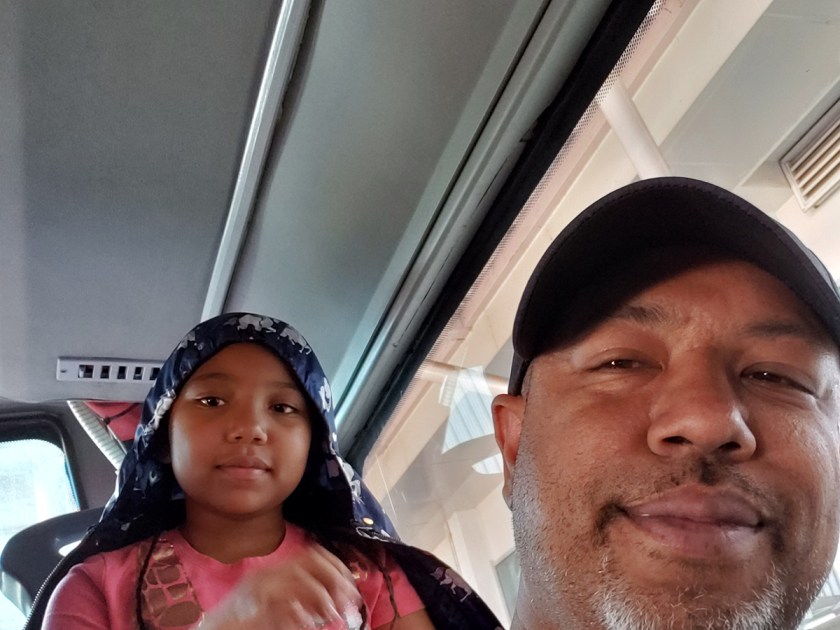
It was about an hour-long ride from the airport to Fort Kochi where we were staying. We grabbed a cab and headed towards the coast.
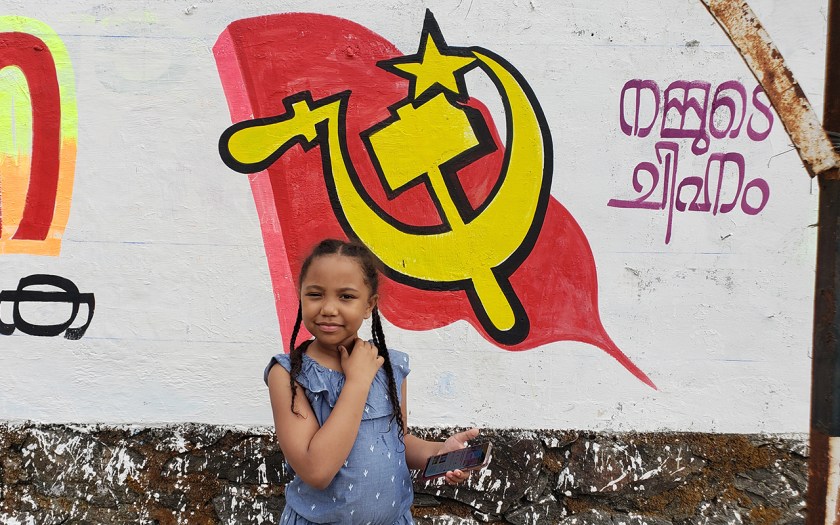
With the elections going on, there were signs all over the place. Unlike in America where usually it’s yard signs and billboards, all of which are taken down afterwards, in India they like to spray paint their preferred candidates and political parties as well. One of the more popular political parties is the Communist party. And coming from America and all the Trump-Russia drama, it was a bit jarring see the hammer and sickle everywhere.
We stayed at a boutique hotel called The Killians. April isn’t a very tourist-heavy time of the year, especially during elections, so it almost felt like we had the place to ourselves. Maybe being foreigners, or maybe because they didn’t have much else to do, the staff was great.
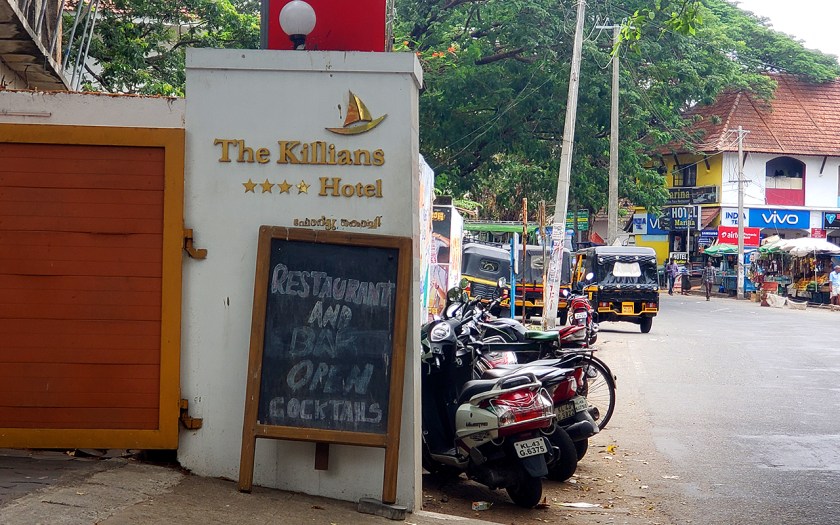
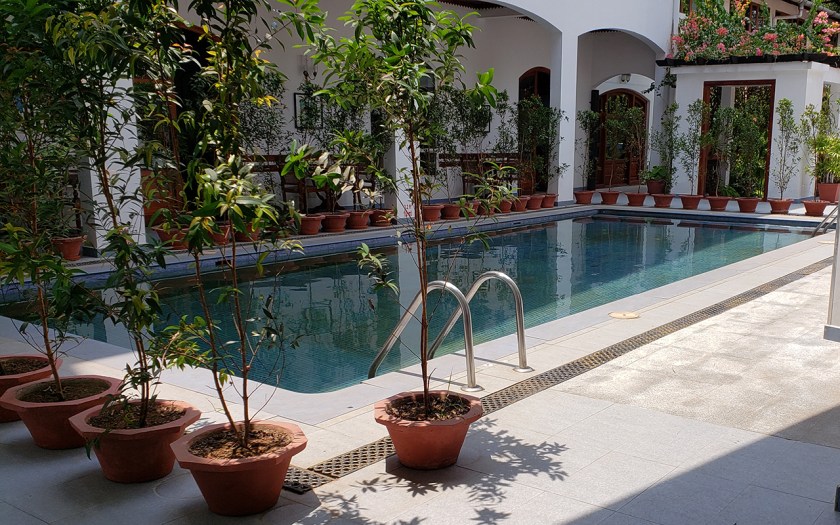
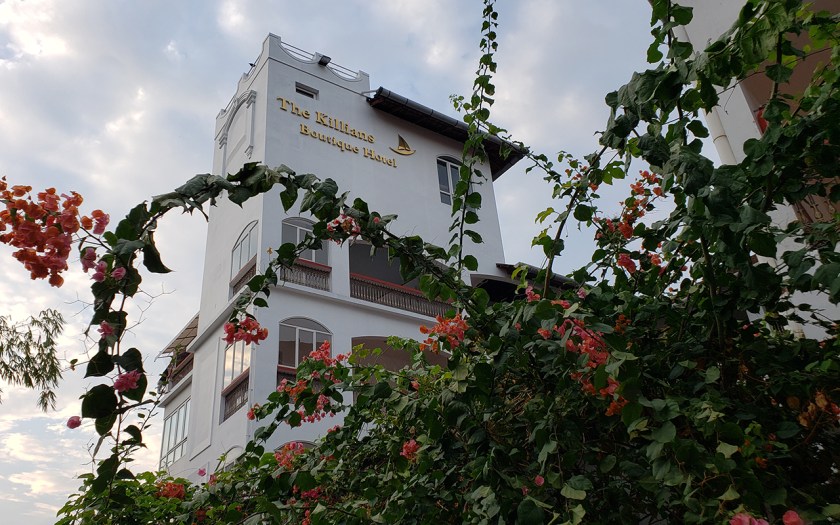
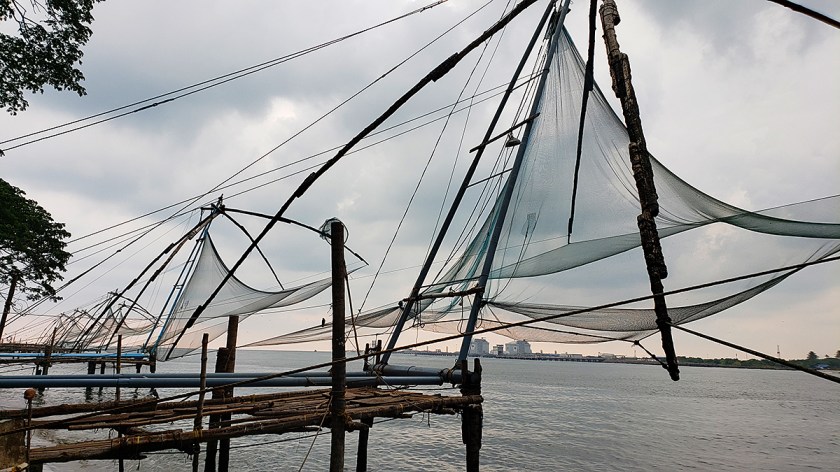
That first night we headed down the street to see the Chinese fishing nets.
Chinese fishing nets are a type of stationary lift net in India. They are fishing nets that are fixed land installations for fishing. While commonly known as “Chinese fishing nets” in India, the more formal name for such nets is “shore operated lift nets”. Huge mechanical contrivances hold out horizontal nets of 20 meters or more across. Each structure is at least 10 meters high and comprises a cantilever with an outstretched net suspended over the sea and large stones suspended from ropes as counterweights at the other end.
Each installation is operated by a team of up to six fishermen. While such nets are used throughout coastal southern China and Indochina, in India they are mostly found in the Indian cities of Kochi and Kollam, where they have become a tourist attraction. This way of fishing is unusual in India and almost unique to the area, as it was introduced by Chinese explorers who landed there in the 14th century. Indeed, one interpretation of the city name Kochi is ‘co-chin’, meaning ‘like China.’
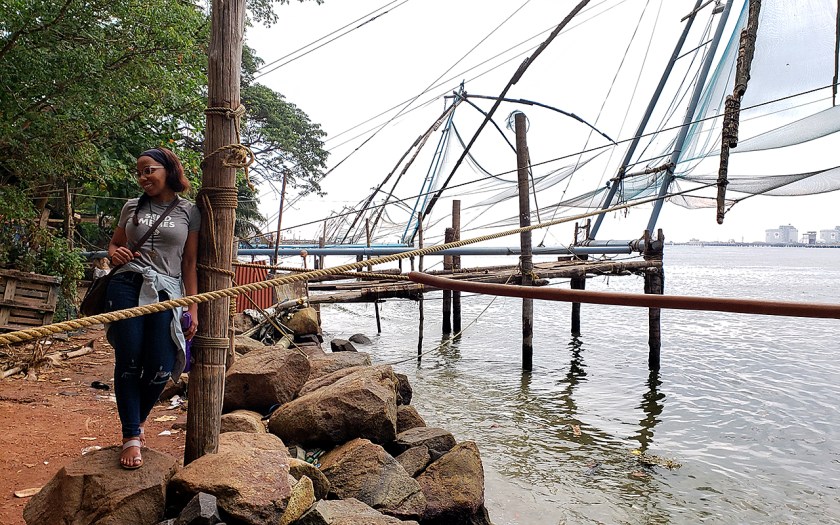
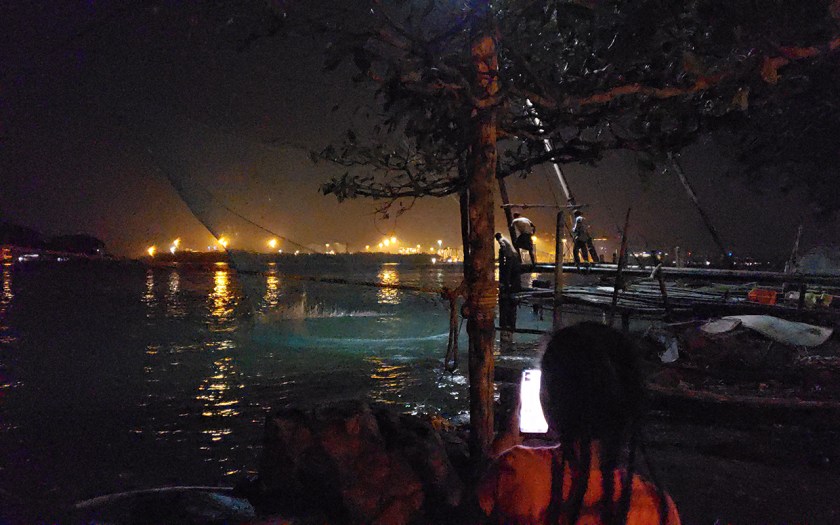
Very peaceful area. Quiet at night. Everyone was polite. I was asked if I was from Saudi Arabia and Mauritania, but once I mentioned Washington, DC, everyone got even more nice.
But compared to Chennai, Kochi could use some help with its sanitation. The streets were lined with debris. Trash. Mounds of it. There were murals pleading with the locals to keep Kochi clean, but I don’t think the message has caught on. It is a very green area, though. There’s almost a canopy over the city formed from these massive trees. They provided plenty of shade while we walked the area during the day.
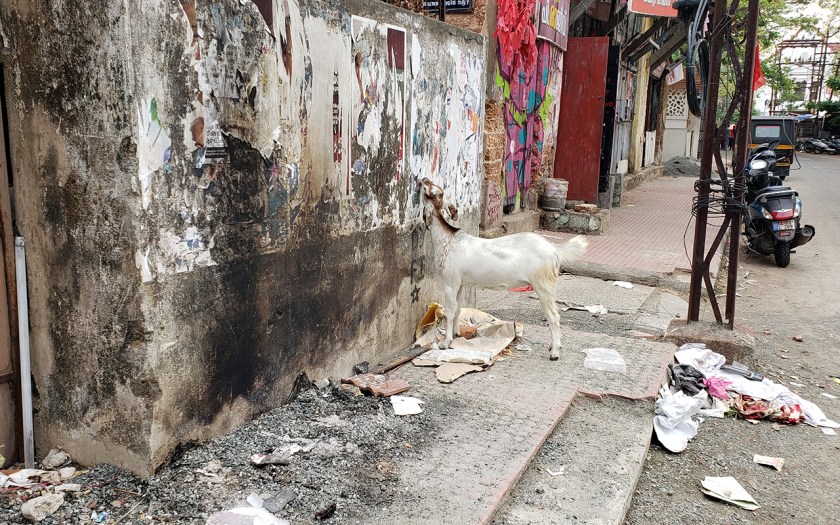
But it really gets green and pristine when you head inland and visit the backwaters.
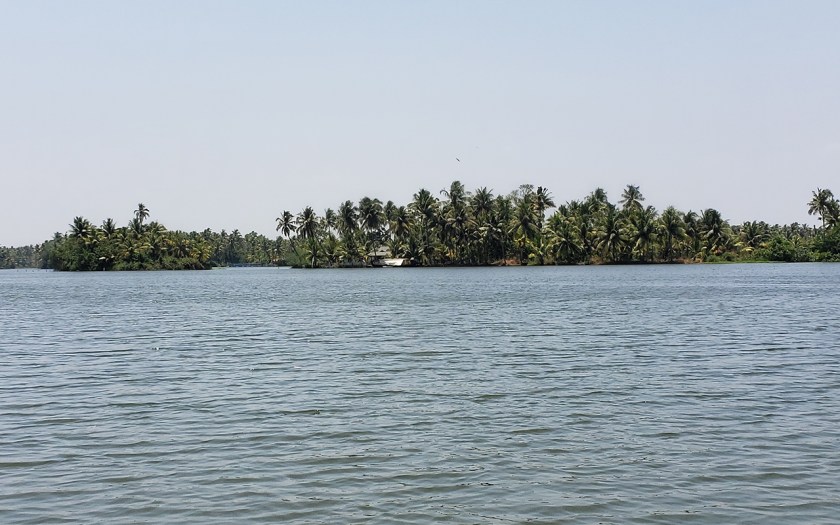
The Kerala backwaters is the rather unappealing name given to the peaceful and picturesque palm-lined network of lagoons, lakes, rivers, and canals that run inland from the coast of Kerala, from Kochi (Cochin) to Kollam (Quilon). The main entry point, situated between Kochi and Kollam, is Alleppey. At the heart of the backwaters is vast Vembanad Lake.
Traditionally, the backwaters are used by locals for transport, fishing, and agriculture. Annual snake boat races, held along the backwaters, also provide a great source of entertainment for the locals and tourists alike.
The lush green landscape, diverse wildlife, and houses and villages that line the backwaters make a journey along these waterways seem like a journey through another world. No wonder the backwaters is one of the must-visit tourist places in Kerala.
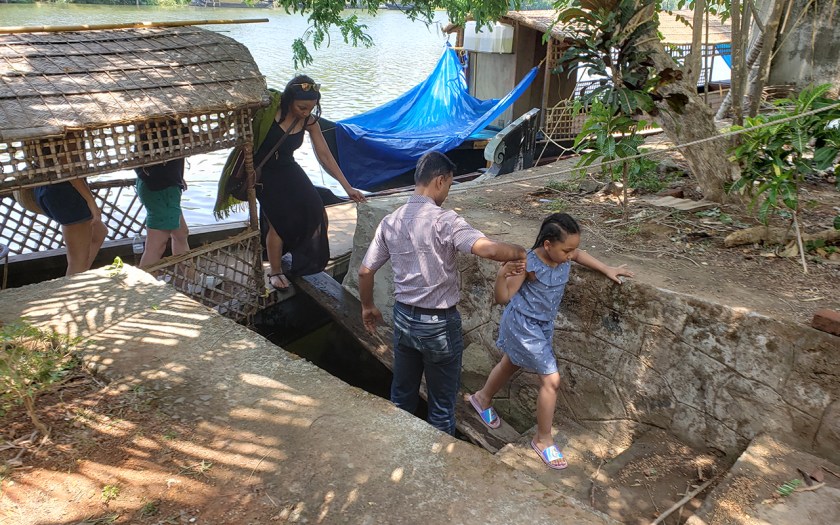
The hotel arranged a driver to take us to where we could experience the backwaters. It was basically some dude’s house off the canal. Literally, we crossed to his backyard where the boat was. We waited for a handful of other tourists and off we went.
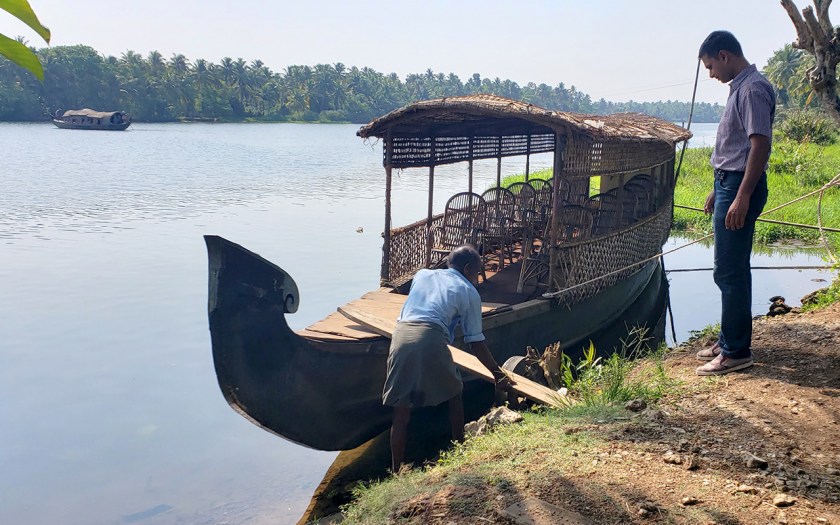
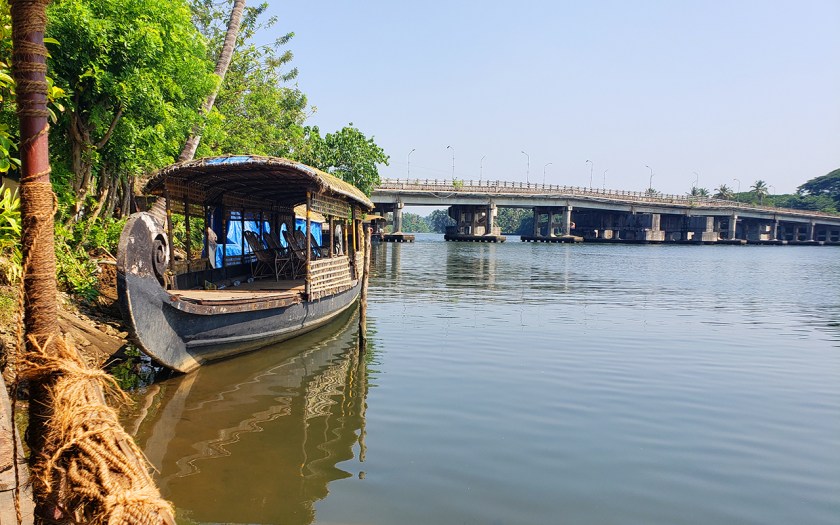
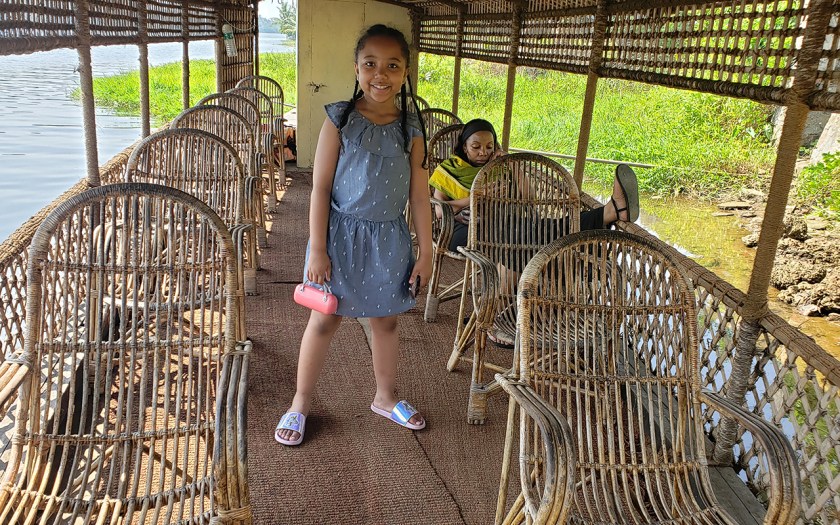
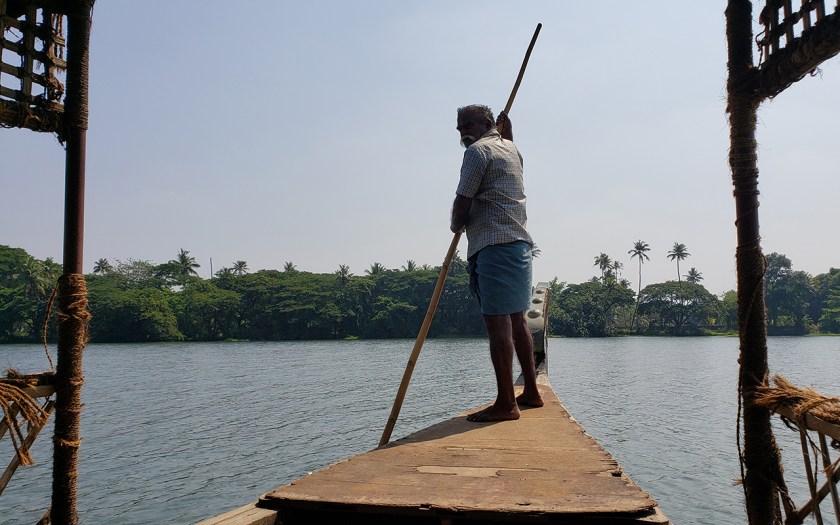
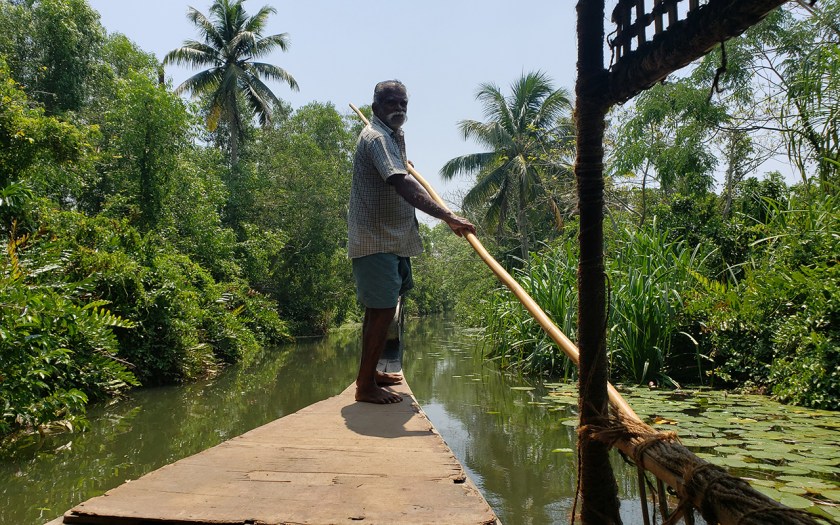
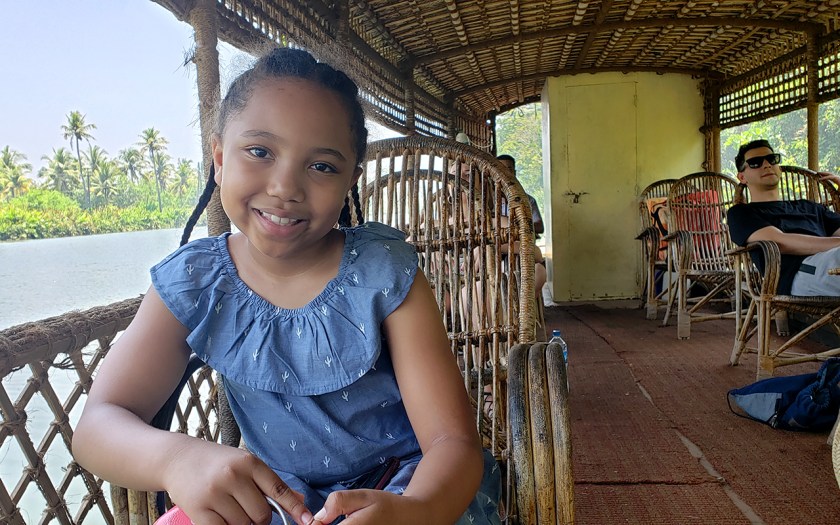
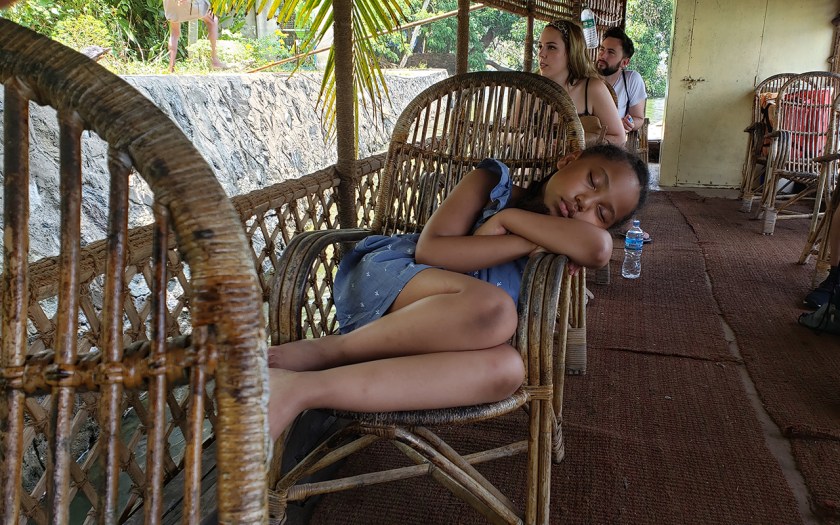
Being so manually powered, it was a slow crawl through the lagoons and canals and waterways. Very peaceful. Maybe a bit too easygoing for me, but Nduku loved it. This was her type of activity. Even took a brief nap at one point.
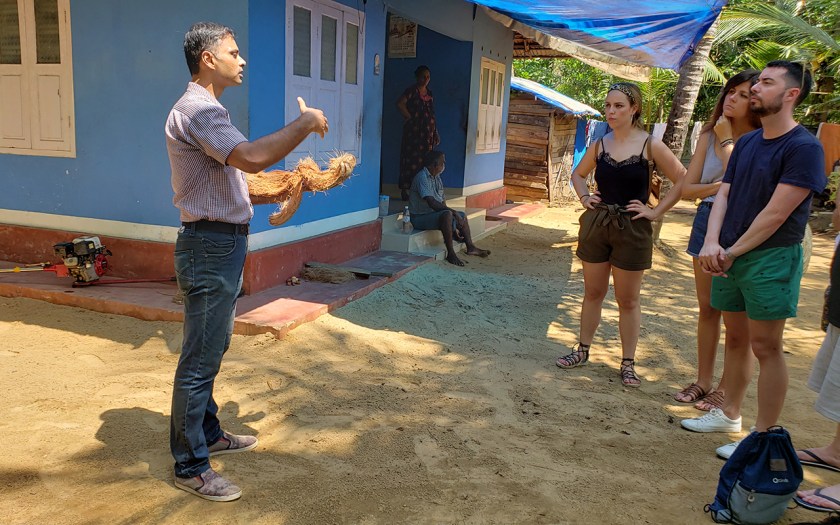
We did make a few stops. Not quite the same as a port call, we did debark at some local’s house where we were shown how they do the wickerwork using the leaves of the palm trees.
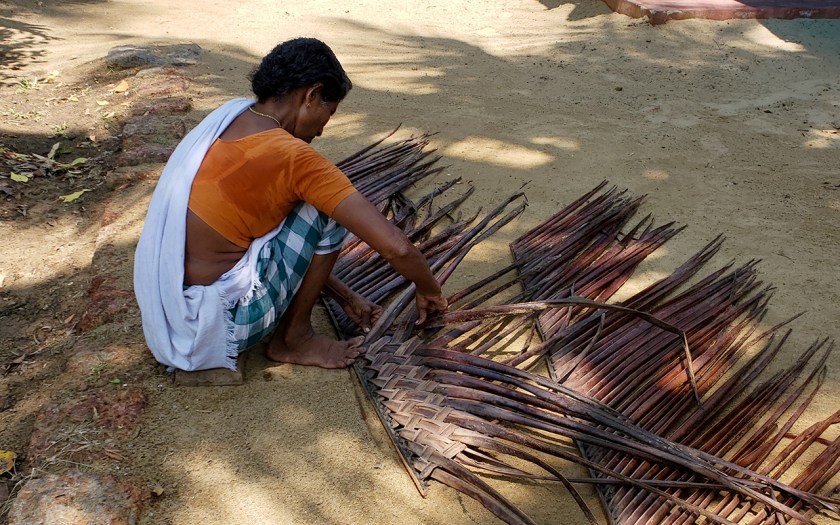
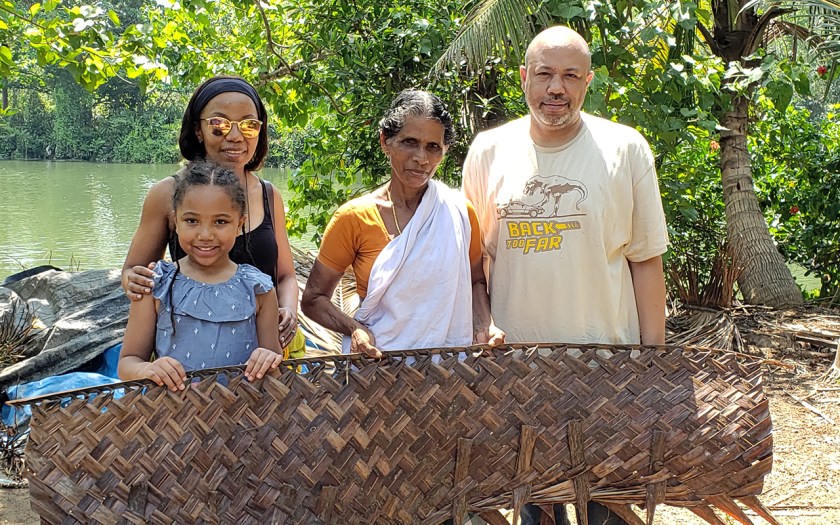
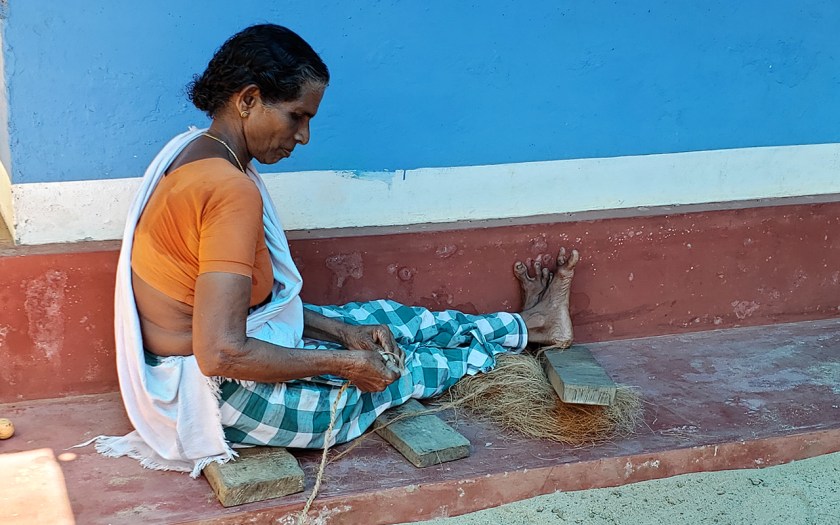
We also watched as she made rope using plant fiber. To think, this little lady, with some plant fiber, can make a rope strong enough to go mountain climbing or keep your boat from floating away. Didn’t take long, either, to whip up a few feet of rope.
Then, the slow ride through the canals continued. I confess, way too slow and lazy for me. The scenery was beautiful, it was definitely tranquil, but after about two hours, I was hoping there was an engine we could whip out and get us back sooner.
Our final stop was at another family’s house where they fed us like locals. That’s the nice way of saying I basically taste tested and passed. I’m sure the food was delicious, but my taste buds aren’t there yet. Eating off a palm leaf was pretty cool though. Different.
Back in Fort Kochi we walked around a bit. Had some good food. It looked like it was going to rain so we made a quick dash to check the Santa Cruz Cathedral Basilica.
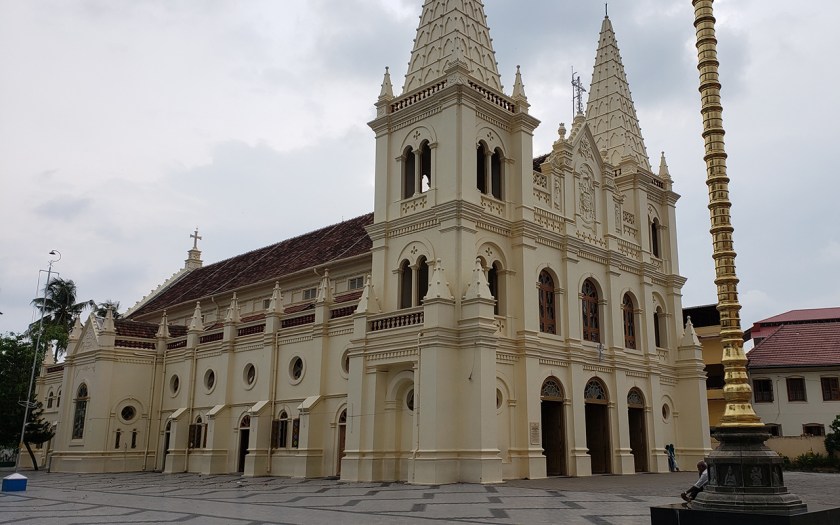
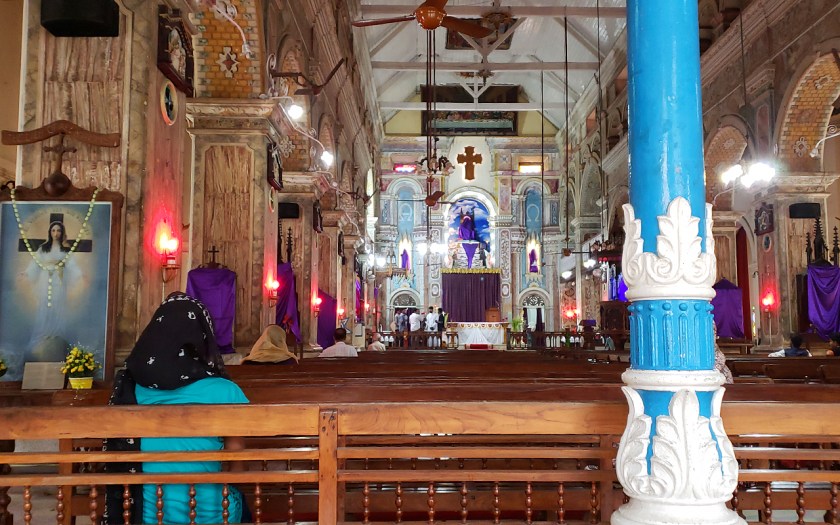
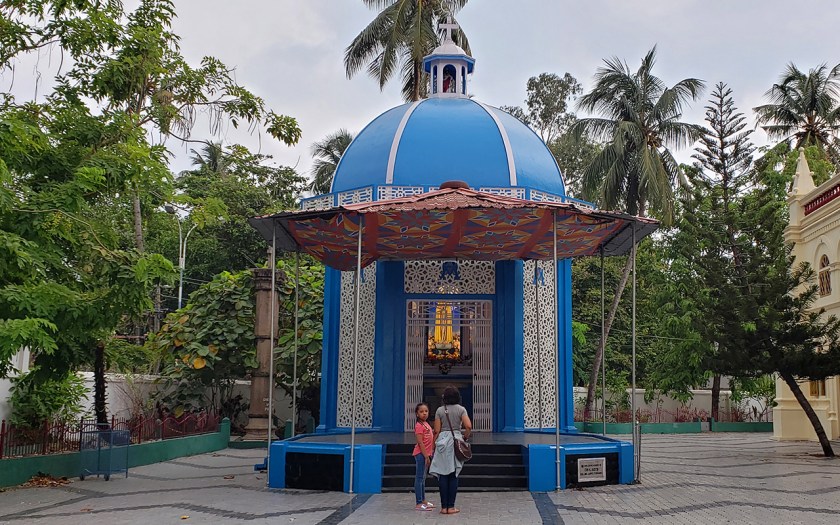
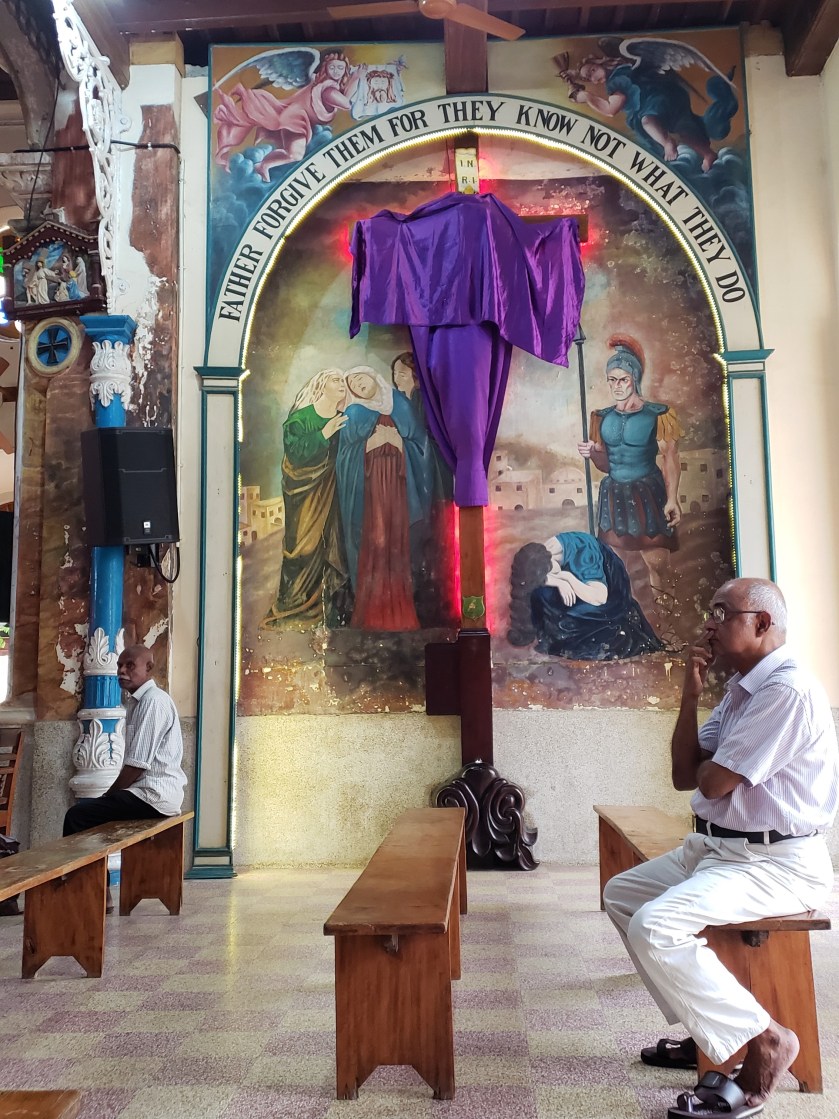
Santa Cruz Cathedral Basilica was built by the Portuguese in Fort Cochin, one of the oldest Christian/Catholic Churches in India, which is owned and administered by the Diocese of Cochin.
Counted as one of the heritage edifices of Kerala, this church is one of the finest and most impressive churches in India and visited by tourists the whole year round. It is a place of devotion as well as a center of historic significance, endowed with architectural and artistic grandeur and colours of the gothic style.
I remember what my boss told me once about how the roads are repaved in India. In America we strip away the top layer then repave it; in India, they just lay another layer on top of what’s there. After a while, the road sits higher than the land. Why is this important? Well, when it rains, all that water runs off the roads and causes flooding. So, when those first few drops started falling on our way back to the hotel, I couldn’t help but notice that the roads did sit a few inches higher than the curb.
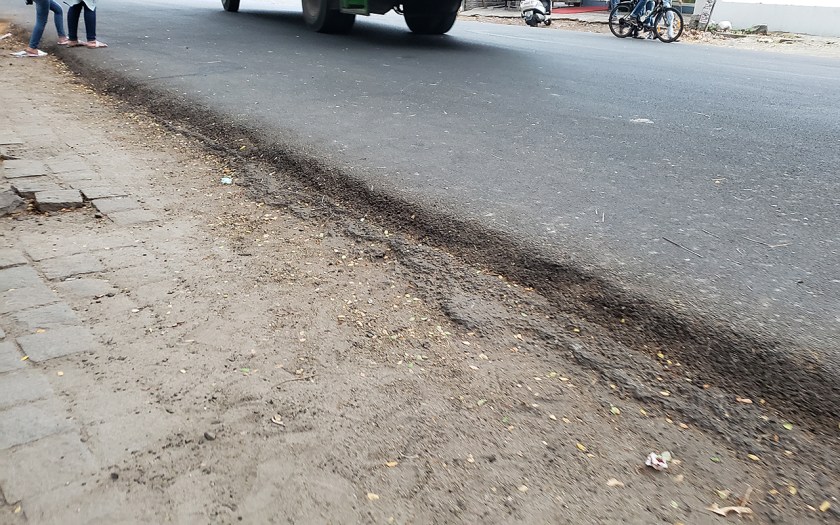
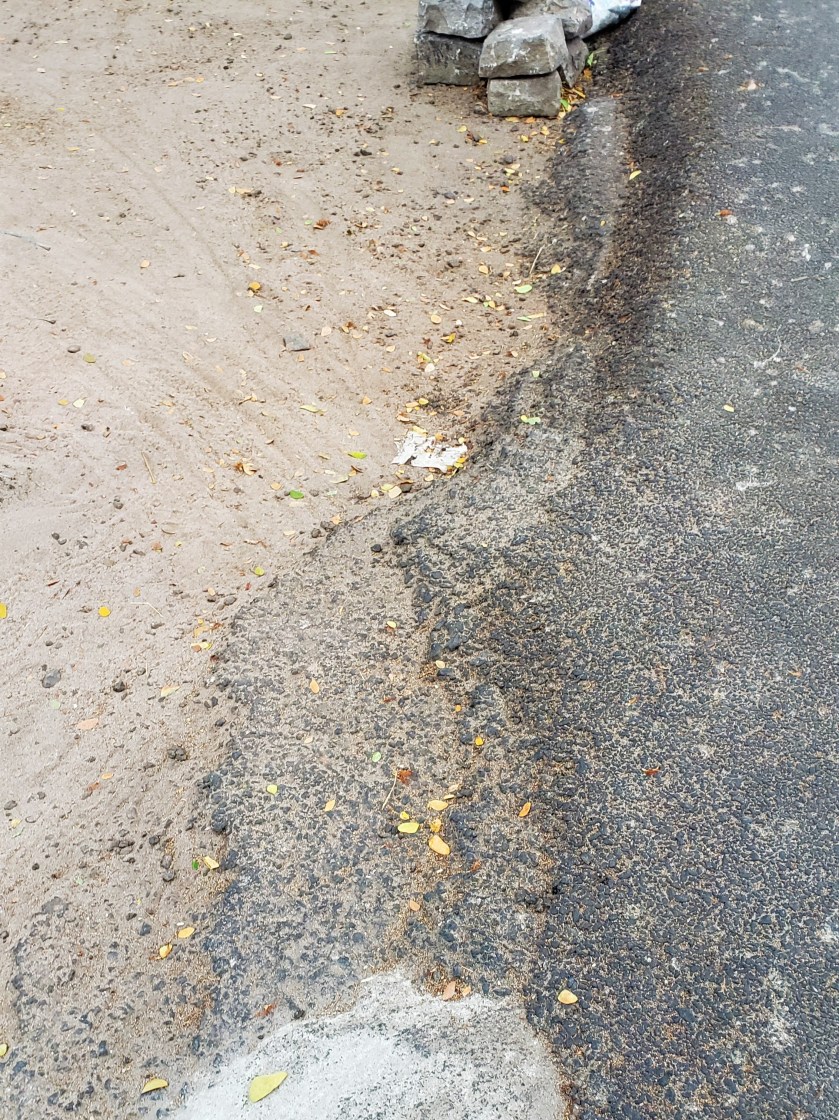
Just an observation. It didn’t flood. But it did rain and it was a heavy rain, punctuated with a lot of lightning and thunder.
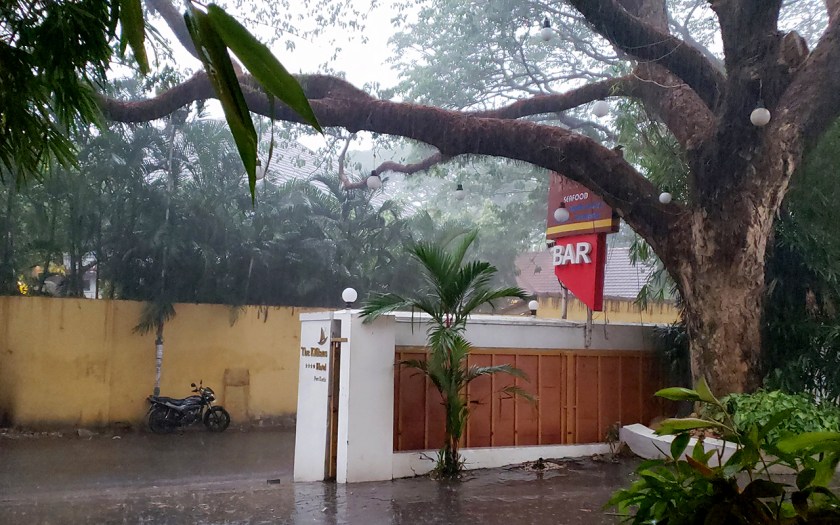
The weather cleared up though, enough for us to make it down the road to Greenix Village. When in Kerala you have to watch a performance of Kathakali. It’s a play, or a dance, basically a show in which the story is told with very intricate hand and eye movements. And the outfits and makeup are extravagant.
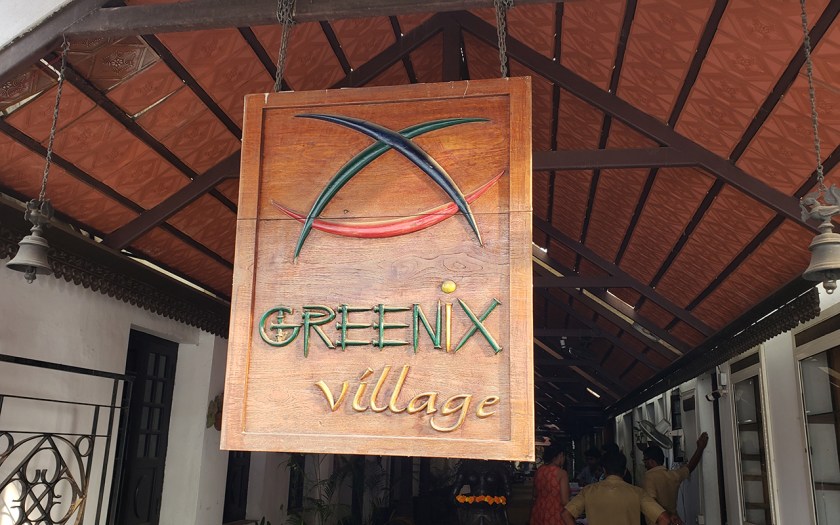
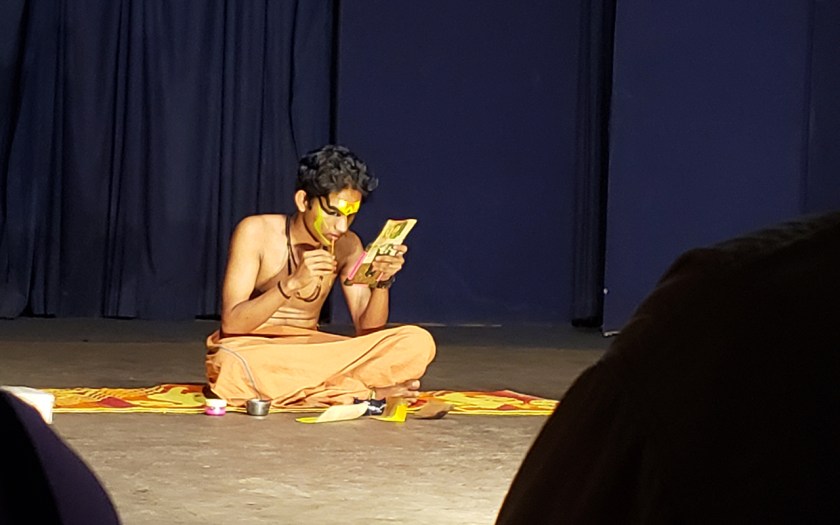
We paid the extra money to be admitted an hour early to watch them put on the makeup. I’m not sure what I was expecting, but it was exactly that. Just this kid putting on his makeup. I found it a bit hilarious that there were a bunch of people there so early watching this kid simply getting ready for the show.
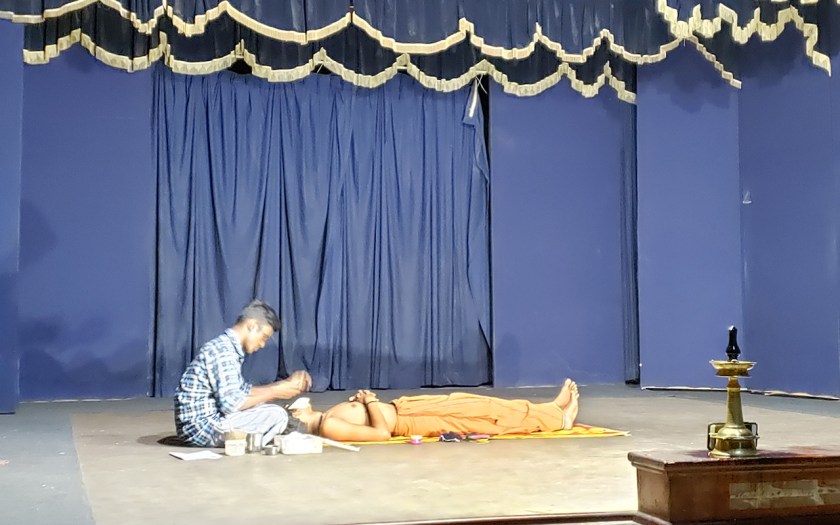
And then, the show started and that skinny kid all of the sudden turned into this bigger than life character. There are no spoken lines. It’s all in the eyes, the hands, the way they move on the stage, and even if you don’t know exactly what the story is that they’re telling, you’re still entertained by the dramatic movements, the coordinated dance between the actors, the singer in the background providing the soundtrack that added to the drama.
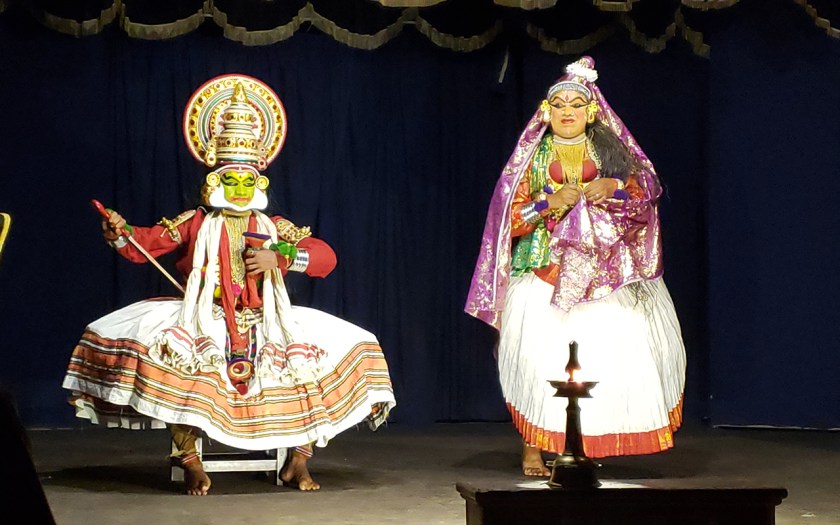
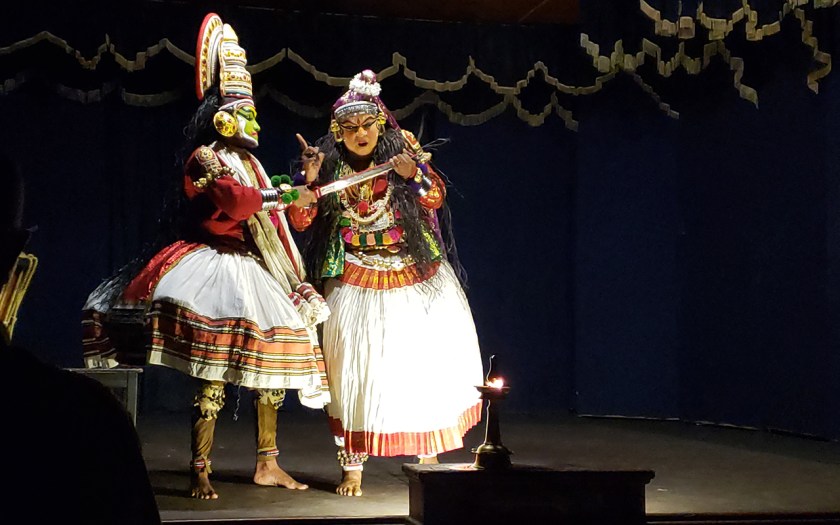
‘Kathakali’, an important genre in the Indian classical dance form, is associated with storytelling form of this art. It is the dance drama from the south Indian state of Kerala. Similar to other Indian classical dance arts, the story in ‘Kathakali’ is also communicated to audience through excellent footwork and impressive gestures of face and hands complimented with music and vocal performance.
However it can be distinguished from the others through the intricate and vivid make-up, unique face masks and costumes worn by dancers as also from their style and movements that reflect the age-old martial arts and athletic conventions prevalent in Kerala and surrounding regions. Traditionally performed by male dancers, it developed in courts and theatres of Hindu regions contrary to other Indian classical dances which predominantly developed in Hindu temples and monastic schools. Although not clearly traceable, this classical dance form is considered to have originated from temple and folk arts that trace back to 1st millennium CE or before.
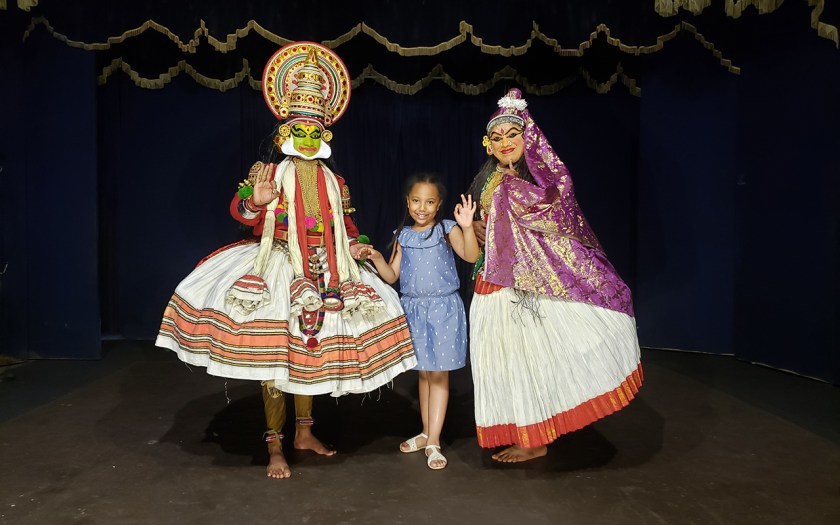
Best part for me was that Najwa really enjoyed it. Especially when they invited the kids after the show to come onstage.

 contrails